74% of consumers now use social media to guide their dining choices. The camera eats first.
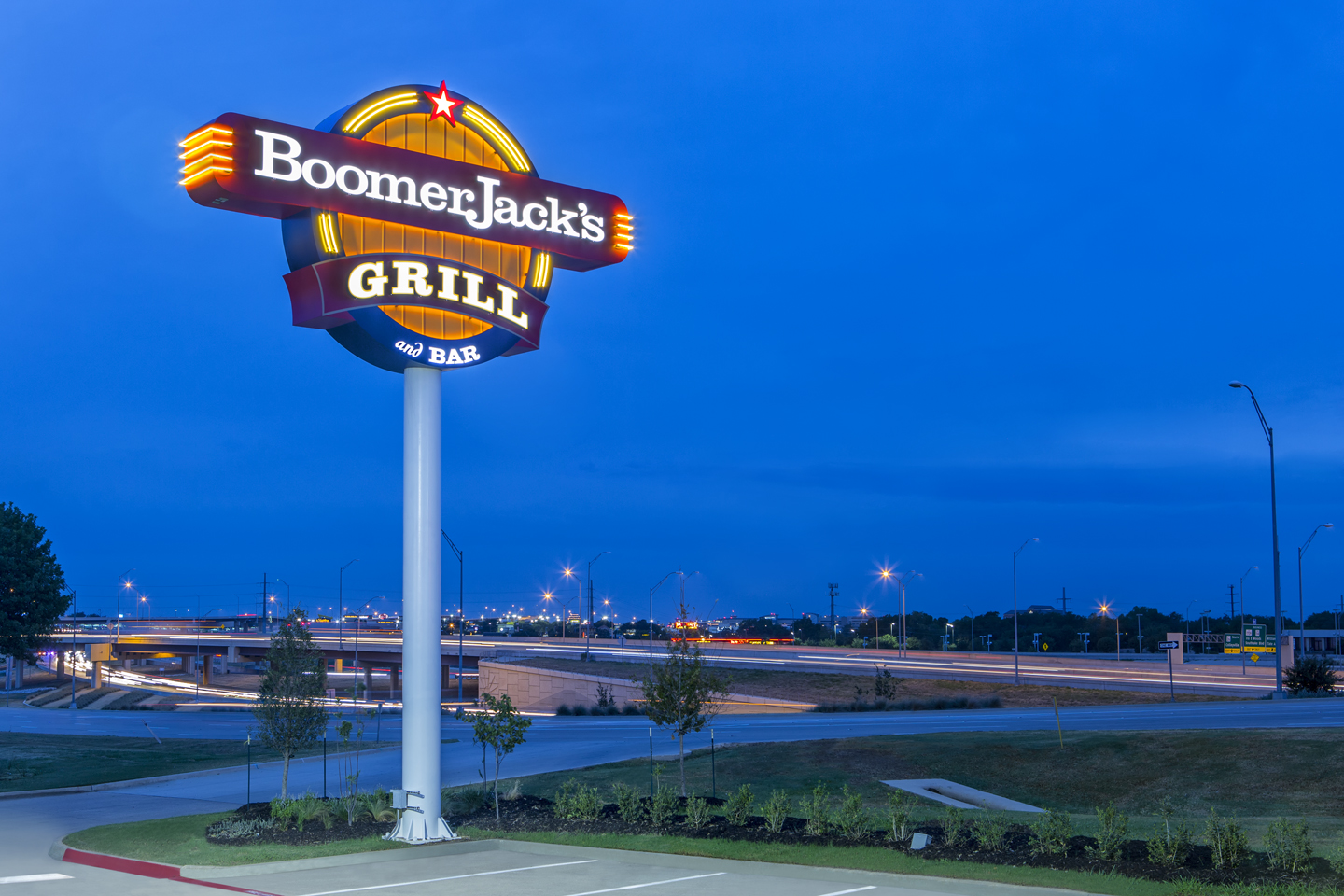
Bizarre Bunny has partnered with BoomerJack's Grill & Bar, the Texas-based sports bar chain with 16 locations across Dallas-Fort Worth and Houston, to produce what is believed to be the first microdrama series created for a US restaurant brand. The project sits at the intersection of two forces that have been moving toward each other for years: a trillion-dollar restaurant industry struggling with traditional advertising, and an entertainment format that is reshaping how the world consumes content on mobile.
The Series
Five Episodes. Vertical. Built for Phones.
Episode 1Dog Podcast
Episode 2The Podcast
Episode 3March Madness
Episode 4Baseball Classic
Episode 5Florida Man
The Format
The Microdrama Explosion
Microdramas are short-form scripted series, typically 60 to 90 seconds per episode, shot vertically and designed for mobile. The format originated in China, where it generated $7 billion in revenue in 2024, surpassing the country's entire domestic box office for the first time.
The format has since gone global. Worldwide microdrama revenues hit $11 billion in 2025 and are projected to reach $26 billion by 2030, according to Media Partners Asia. In the US alone, revenues reached $819 million in 2024 and are forecast to grow to $3.8 billion by 2030.
$26B
Projected global market by 2030
5,848%
YoY user growth across the top five apps
35.7 min
Daily viewing per user, beating Netflix on mobile
The engagement numbers behind the format are what make it impossible to ignore. ReelShort, the leading microdrama platform outside China, now commands 35.7 minutes of daily viewing per user, outpacing Netflix (24.8 minutes), Amazon Prime Video (26.9 minutes), and Disney+ (23 minutes) on mobile. Across the top five microdrama apps, monthly active users grew 5,848% year over year from late 2023 to late 2024.
One in five of 2025's most downloaded entertainment apps is now a microdrama app.
"Micro dramas mark a structural shift from an elite-led long narrative era to an algorithm-driven era of fragmented emotional consumption. In behaviour, business model, and industrial production, micro dramas are now part of the core video infrastructure, not a one-off trend."
Britney Pai, dentsu Greater North Asia
The format works because people already watch content about places they want to eat. A microdrama gives them a reason to keep watching.
The Problem
A $1.1 Trillion Industry Fighting for Attention
The US restaurant industry crossed $1.1 trillion in annual sales in 2024, making it one of the largest consumer-facing industries in the country. It employs 15.9 million people. And yet, the way restaurants reach customers is fundamentally broken.
Banner ad click-through rates have collapsed from 44% in 1997 to below 0.1% today. 93% of consumers skip or block ads regularly. 88% say overly repetitive advertising makes them pay less attention. Print advertising is declining at 5.7% annually. 70% of QSR video ad impressions have shifted to connected TV as consumers abandon linear broadcasting.
The top 10 restaurant chains still spent $3.8 billion on measured media in 2024. McDonald's alone spent $638 million. Domino's spent $774 million. The money keeps going in, but the returns keep going down.
Meanwhile, the way people actually discover restaurants has moved somewhere else entirely.
Diners Are Already on Their Phones
74%
of consumers now use social media to guide their dining choices. 62% check a restaurant's social media before deciding where to eat. 41% of Gen Z diners use TikTok specifically to discover new restaurants, and 61% of all diners say TikTok food content directly influences where they eat.
Restaurants know this. TikTok adoption among restaurants nearly doubled in a single year, from 26% in 2023 to 48% in 2024. 99% of full-service restaurants maintain at least one active social media profile.
But there is a difference between being present on a platform and actually commanding attention on it. Most restaurant social content is static food photography, promotional graphics, and occasional behind-the-scenes clips. It is functional, but it is not the kind of content people choose to watch, share, and come back for.
Microdramas are.
"Micro dramas' outsized emotions, sharp plot twists and short run times are structurally optimized for sharing on social networks."
Max Willens, eMarketer
The Proof
The Restaurant Brands That Already Proved It
While the US restaurant industry has yet to embrace the format, the world's biggest food brands have already tested it in China, and the results speak for themselves.
KFC launched "Rebirth of the Foodie Queen" on Douyin in 2024, a 13-episode microdrama series where an empress is reincarnated as a modern-day actress who discovers KFC. The series generated over 1.4 billion views. Individual episodes earned over 52,000 likes. Weekend meal deals were tied directly to episode drops.
Starbucks produced "I Opened a Starbucks in Ancient Times," a six-episode series about a barista who time-travels to ancient China and opens the region's first coffee shop. The series attracted 1.35 million new local lifestyle customers and cost approximately $420,000 to produce. Following the campaign, Starbucks overtook Luckin Coffee to become Douyin's top beverage brand.
McDonald's launched its own reincarnation-themed series, filmed inside actual McDonald's kitchens. Both Mixue Bingcheng and Cha Panda, two of China's largest bubble tea chains, followed with their own branded microdramas.
By mid-2024, 45% of all Chinese advertisers had incorporated microdramas into their marketing. The format works for food brands because it does something no ad campaign can: it turns a restaurant into a setting that people want to spend time in, episode after episode.
Brands Are Buying In Across the Board
The brand adoption is not limited to food. Across industries, brands are moving from sponsoring microdramas to commissioning entire series.
Chinese skincare brand Kans invested $7 million in a microdrama strategy that generated 5 billion total views and $868 million in attributed sales on Douyin alone, a return of more than 120 times their investment. Estee Lauder's "Only Love" series on Douyin delivered a 5x ROI with an 800% increase in brand search traffic.
In the US, the wave is just beginning. Procter & Gamble's Native brand launched "The Golden Pear Affair" in February 2026, a 55-episode microsoap described as the first feature-length branded microdrama in the US. Crocs partnered with ReelShort for a five-episode Valentine's Day series. Maybelline produced a holiday microdrama starring Lacey Chabert that went from concept to finished product in under six weeks.
Over 300 advertisers were active in microdrama marketing globally by mid-2025, a 53.9% year-over-year increase. Monthly ad creatives in the format surged 275% year over year.
"Brands can either rent attention through advertising, or own attention by financing entertainment itself."
Huiwen Tow, Head of VIRTUE Asia
BoomerJack's Grill & Bar. 16 locations across Dallas-Fort Worth and Houston. The neighborhood game-day headquarters for thousands of Texans.
The Partner
Why BoomerJack's
BoomerJack's Grill & Bar is the kind of brand that microdramas were made for.
Founded in 2002 by Brent Tipps, named Entrepreneur of Excellence by Fort Worth Magazine, the BoomerJack's brand has grown into a 16-location sports bar and grill chain across Dallas-Fort Worth and Houston, with more locations on the way. The brand runs on a trusted formula: to create a sports-centered environment where everyone can come to enjoy a drink and a scratch-made meal at a great price with the feel of neighborhood community where everyone belongs while catching all the games on their extensive AV systems. It's the neighborhood game-day headquarters for thousands of Texans, backed by over 2,000 employees and a community footprint that includes more than $650,000 raised for cancer support through Joan Katz Cancer Resource Center alone.
16
Locations across Texas
2,000+
Employees
$650K+
Raised for cancer support
Like most regional restaurant chains, BoomerJack's marketing has been relying on a pretty safe playbook: local promotions, social media posts, and loyalty programs. With 11,000 Instagram followers across 16 locations, the brand's social presence is functional but needed to better reflect the energy and loyalty of the people who actually fill those patios every weekend.
A microdrama changes that equation. Instead of competing for attention against millions of other restaurant posts, BoomerJack's becomes the setting of a story people choose to watch. The game-day energy, the regulars, the staff, the massive LED walls, the patios, all of it becomes the backdrop for entertainment that travels on its own.
"Bizarre Bunny has created the unique and effective piece that had been missing from our social media environment. The engagement is nicely aligning with the direction we wanted to take our brand in. Their production skills and efficiency are only outdone by their relevant, entertaining scripts."
Brent Tipps, Owner, On Deck Concepts
"Working alongside the team at Bizarre Bunny has afforded us the joy of being able to go from creative brainstorming sessions to tangible, dynamic video assets within a very condensed timeline. Their ridiculous capabilities have allowed us to see incredible growth for our clients as well as our own agency in just a short amount of time."
Jeff Jackson, Creative Director, Clayton Everett Design
The Opportunity
The Numbers That Matter
The restaurant industry spends approximately $9 billion annually on advertising. Restaurants with active video strategies report 2-3x faster audience growth than those without. Video content marketing generates 49% faster revenue growth compared to non-video strategies.
But the microdrama format takes this further. Where a standard social video might capture a few seconds of passive scrolling, microdramas command 35.7 minutes of daily viewing per user. Where an ad is an interruption, a microdrama is an invitation. Where a campaign ends, a series builds an audience that comes back.
86%
Brand recall from branded content
22x
More effective than traditional ads
$9B
Annual US restaurant ad spend
Branded content produces 86% brand recall compared to traditional ads. It is 22 times more effective than conventional advertising, according to the International Journal of Advertising. And unlike paid advertising, branded entertainment reaches audiences that ad blockers, banner blindness, and skip buttons have made unreachable.
For a regional chain like BoomerJack's, with deep roots in its community and a brand built on personality, the microdrama format is not just a marketing experiment. It is the beginning of a new way for restaurants to own their audience instead of renting it.
 ×
×